.png)
Traveling to Confirm What We’ve Already Seen
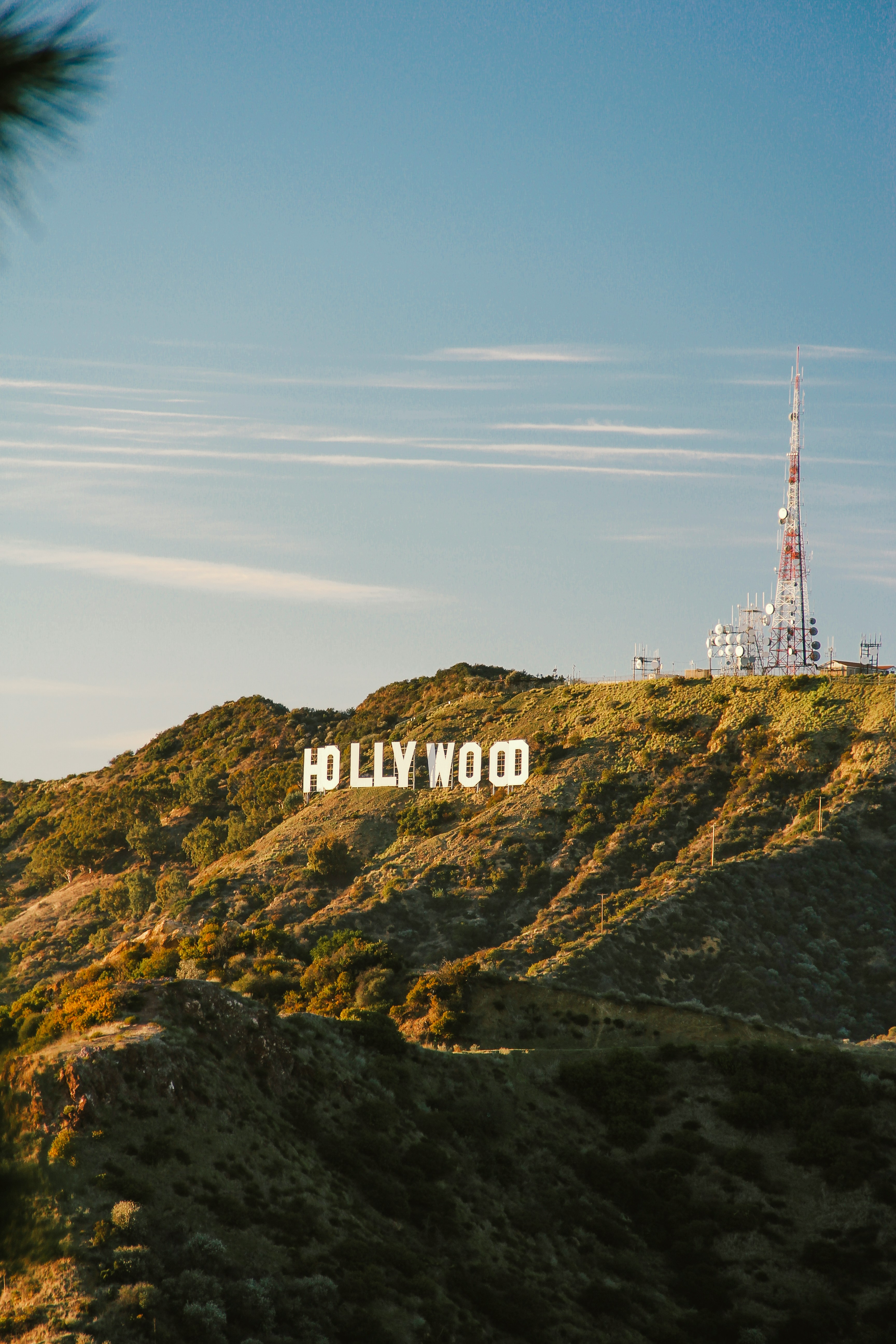
Travel no longer begins with curiosity. It begins with recognition.
Long before a traveler boards a plane, the destination has already been visited, again and again, through a screen. Images circulate, repeat, and sediment into expectation. The journey itself increasingly consists not in discovering the unknown, but in confirming what has already been seen. To travel, today, is often to verify that reality aligns with a pre-existing visual promise.
This transformation was anticipated decades ago by the British sociologist John Urry, who introduced the concept of the tourist gaze. Tourism, Urry argued, is not a neutral encounter with place. It is a socially constructed way of seeing, shaped by images, narratives, and shared codes that precede the act of travel itself. We do not simply look at the world; we look according to what we have been taught to expect.
What has changed today is not the existence of the gaze, but the industrial system that now manufactures it.
From the Tourist Gaze to the Algorithmic Gaze
Urry developed his theory in an era dominated by guidebooks, cinema, advertising, and television—media that framed destinations slowly and relatively coherently. In the age of TikTok and Instagram, that gaze has become algorithmic.
Recent research confirms the scale of this shift. According to “The End of Wanderlust? How Travel Content Is Getting Real,” a study by We Are Social, 75 percent of travelers now use social media as their primary source of travel inspiration. Among Generation Z, the dynamic is even more pronounced: 89 percent say they discover travel destinations on TikTok, and 40 percent report having booked a trip directly influenced by content they saw online.
These platforms do not simply distribute images; they rank, reward, and normalize them. The algorithm privileges content that is instantly legible, emotionally uncomplicated, and easily reproducible. What rises is not complexity, but clarity. Not nuance, but repetition.
The result is a new regime of perception: an algorithmic gaze that teaches travelers what a place should look like, long before they arrive.
Bali as a Visual Script
Consider Bali.
On social platforms, Bali circulates through a remarkably narrow visual repertoire: infinity pools suspended above jungle canopies, yoga poses at sunrise, waterfalls framed by lush greenery, bodies in serene communion with nature. The island appears as a timeless sanctuary of wellness and spiritual escape.
This imagery is not false. But it is partial—and carefully aligned with global desires for calm, authenticity, and aesthetic retreat. Bali’s urban density, social tensions, and economic realities largely vanish from the feed. What remains is a visual script that travelers arrive not to interrogate, but to inhabit.
The destination becomes a stage set. The traveler’s role is to step into the image and reproduce it.
Paris, Dubai, New York: Cities Reduced to Signs
This logic is not confined to tropical destinations. It governs the world’s most familiar cities as well.
In Paris, the tourist gaze collapses the city into a mood: Eiffel Tower sunsets, café terraces, cobblestone streets bathed in soft light. Paris is consumed less as a lived metropolis than as a cinematic fantasy of romance and timelessness.
In Dubai, the dominant signs are scale and spectacle: vertical skylines, luxury interiors, desert sunsets, futuristic ambition. The city is read as visual proof of excess and possibility.
In New York City, imagery oscillates between skyline hero shots and stylized grit—fire escapes, neon lights, yellow taxis. New York performs intensity, movement, aspiration.
In each case, travel becomes an act of activation. The visitor does not discover the city; they recognize it.
Africa and the Persistence of Restrictive Imaginaries
For African destinations, the stakes are higher and the constraints more severe.
Despite the diversification of content on social platforms, Africa remains burdened by a narrow and often damaging visual economy. Too frequently, the continent is reduced to a limited set of signs: wildlife, savannahs, danger, poverty, or a generalized notion of “rawness.” Even when imagery is positive, it often reproduces limiting frames, Africa as wild rather than urban, primitive rather than modern, instinctive rather than intellectual.
This is not merely a representational problem. It is a marketing one.
When the available visual signs are narrow, desire remains narrow. Travelers arrive seeking animals, not ideas; landscapes, not societies. The algorithm amplifies what it already knows and Africa is still too often known through inherited stereotypes.
The Strategic Necessity of New African Imaginaries
If tourism today functions as the consumption of visual signs, then Africa’s challenge is clear: it must expand the catalogue of signs it offers to the world.
This does not mean rejecting nature or heritage. It means refusing to let them be the only entry points. Destinations must actively design and circulate new imaginaries, urban, creative, spiritual, festive, contemporary, that reflect lived realities and future ambitions.
In the age of the algorithmic gaze, imagination is infrastructure.
Benin and the Reclamation of Meaning
The Vodun Days in Ouidah offer a compelling illustration of this shift.
For centuries, Vodun was distorted by external narratives—exoticized, demonized, reduced to superstition. These representations were imposed, then repeated, until they became global common sense.
By staging Vodun Days as a large-scale, contemporary cultural event, Benin is not simply celebrating tradition. It is reclaiming authorship over a practice long stigmatized, transforming it into a positive, modern, and dignified sign. Ritual becomes culture. Culture becomes image. Image becomes desire.
The power of Vodun Days lies not only in attendance, but in circulation. The images produced—ceremonies, performances, fashion, crowds—travel far beyond Ouidah. They compete directly with older stereotypes and recalibrate expectation.
This is destination marketing at the level of the imaginary.
Detty December and the Rise of Lifestyle Desire
A similar dynamic is visible in Detty December across Accra and Lagos.
What began as an organic moment has evolved into a powerful seasonal signifier: nightlife, music, fashion, diaspora return, urban intensity. Detty December presents West Africa not as a place of lack, but as a space of abundance and cultural relevance.
Here, tourists do not consume monuments. They consume moments. Belonging. Energy.
Yet the challenge remains to go further—to avoid replacing one narrow image with another. The future lies in multiplying registers: intellect alongside celebration, spirituality alongside nightlife, design alongside tradition.
Marketing Insight: Desire Precedes Movement
The data is unambiguous. With 75 percent of travelers turning to social media for inspiration, and nearly four in ten Gen Z travelers booking trips directly influenced by online content, the decisive moment of tourism now occurs before departure.
Inspiration precedes intention. Intention precedes movement.
The true battleground of destination marketing is no longer the itinerary—it is the feed.
Destinations that fail to design their visual signs will be designed by algorithms and outsiders. Those that succeed will offer layered, repeatable imaginaries that invite participation rather than passive consumption.
Designing the Gaze Is Designing the Future
In the age of TikTok and Instagram, destination marketing is no longer about slogans or campaigns. It is about curating what the world learns to see.
Africa does not lack beauty. It lacks sufficient circulating signs of modernity, complexity, and self-definition.
The task ahead is not to reject visual consumption, but to elevate it—to move beyond animals and sunsets, toward images that make travelers want not only to visit, but to understand, connect, and return.
Because today, travel is no longer simply about seeing the world.
It is about confirming or expanding what we believe the world can be.

Read more articles on branding and creativity

.png)
.png)